EXCERPT: The Irish Ties That Bind
This past month, many of my author colleagues met up near Dublin, Ireland at Maynooth University for the UK's Historical Novel Society Conference. Many of my online acquaintances, my editor, one of my beta readers, and even an author friend who lives in Ireland descended on the university campus for a long weekend of breakout sessions about writing, pitching to agents, and networking. Believe me when I say that I was there in spirit!
Some of their activities and places visited after the conference sounded and looked incredible. I was able to enjoy their journeys vicariously through Facebook and enjoyed photos personally sent to me by some of the people in attendance.
What did I learn? I decided that Ireland is definitely on my bucket-list; a place worth spending at least a week or two, driving the countryside, browsing ancient libraries, hiking hillsides and mountains, and tasting at least several pints!
This week, we have an Irish treat, and it's not even St. Patrick's Day, although Michael Hopkins' lovely book cover suggests a festive read. So many Irish immigrants left their homeland during tragedy. The Great Famine during the 19th century's Victorian era drove many people to seek new lives in the United States. I believe America is a stronger nation as a result of their dogged determination and courage.
I'd like to welcome Michael to Brook's Journal and sincerely hope everyone will take a few minutes to scroll down and sample a little excerpt from some of the history he has researched. And if you have a hunger for the green shores of Ireland or perhaps ancestors who originated from the Emerald Isle, you may want to delve into his work further.
As always, READ ON!!!

ALL ABOUT THE BOOK
From the green hills of southern Ireland to the heartland of America, four families are united by faith, perseverance, and an enduring legacy that spans generations.
As famine and hardship drive Irish immigrants across the Atlantic in the mid-nineteenth century, the Power and Coughlin families plant new roots in the American Midwest. Their daughters answer a higher calling, joining the fledgling Congregation of the Dominican Sisters of Sinsinawa. Through the remarkable leadership of Sister Emily and Sister Samuel, these women help shape a religious community that will educate thousands and leave an indelible mark on the nation.
Their story intertwines with those of the Cullen and Hynes families, whose lives are transformed by the sisters’ influence. Seeking refuge from the unrest of postwar Chicago, they settle in Dixon, Illinois, where friendship, faith, and family bind them to another rising family—the Reagans. As Ronald Reagan grows from a small-town boy into a radio broadcaster, actor, and emerging public figure, the lives of ordinary and extraordinary Americans intersect in unexpected ways.
Set against the backdrop of immigration, the Great Depression, two world wars, and the dawn of the Cold War, The Irish Ties That Bind is a sweeping historical saga of courage, devotion, and the families whose quiet strength shaped generations. It is a powerful testament to the bonds of family, faith, and heritage that endure long after history's tides have turned.
The Irish Ties That Bind
(Family Origins and Early Settlements)
“Ronald Reagan’s Irish ancestry traces back to Ballyporeen, a town in Tipperary County in southern Ireland. His paternal great-grandfather, Michael O’Regan or Regan, was baptized there in 1829. Baptismal records for Michael’s ancestors in Ireland show both “O’Regan” and “Regan” for the same family, which was not uncommon. In Ireland, the “O” prefix in Gaelic names was frequently dropped . . . After Michael Regan moved to England in 1850, he adopted the more phonetic “Reagan” surname spelling due to how many British citizens pronounced his name. . . .
John and Margaret Hynes emigrated from Limerick, Ireland, just after their wedding on February 11, 1843, seeking a better life by establishing roots in the Irish neighborhood of Bridgeport in Chicago, Illinois. . . . Sean and Mary Cullen decided to leave Ireland for America in 1849, seeking better opportunities and pay, despite Wexford being less impacted by the Great Famine. In 1850, the couple settled in Chicago’s Canaryville (south of Bridgeport), a neighborhood that welcomed many Irish immigrants during the Great Famine, especially after the Illinois and Michigan Canal opened in 1848. . . .
In early 1852, shortly after Ellen Power turned eight years old, David and Bridget Power, along with their five daughters, joined hundreds of others aboard the Asia, a barely seaworthy vessel from Southampton that often leaked. The ship headed for New Orleans in the United States after leaving Queenstown and stopping in Waterford. . . . Passengers died of typhus (black fever), dysentery, cholera, starvation, and various forms of malnutrition, including “famine dropsy” that caused severe swelling of limbs. Even so, the surviving Irish passengers carried with them a profound spirit of resilience, unyielding determination, and a blend of intense sorrow with a burning desire to forge a better future in America.”
ALL ABOUT MICHAEL
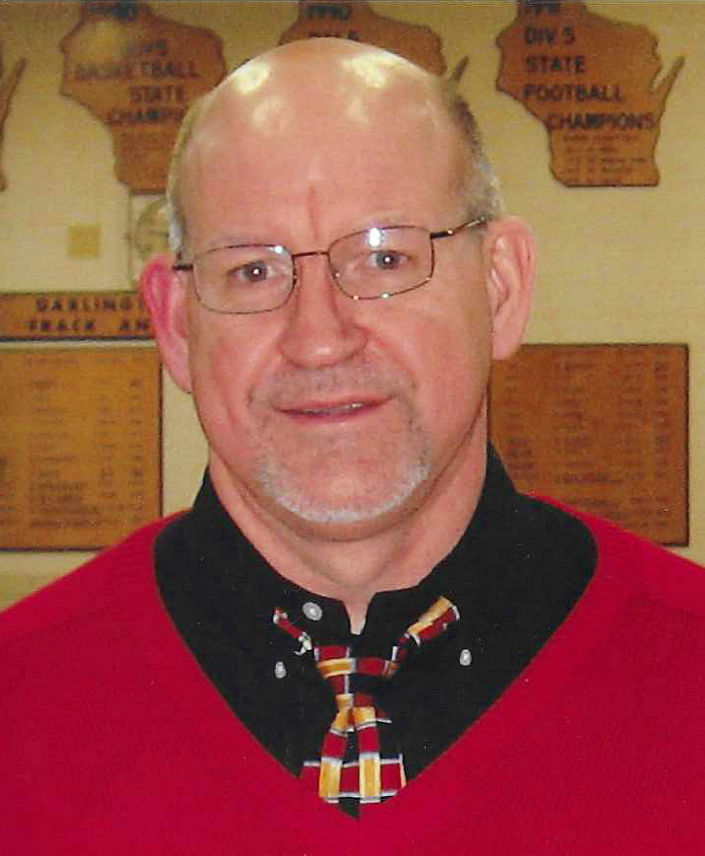
A lifelong resident of Wisconsin, Michael J. Hopkins earned his undergraduate degree in economics from Beloit College, subsequently obtaining a degree in history from Arizona State University and the University of Wisconsin–Platteville. He furthered his academic pursuits by completing a Master of Arts in the Humanities at California State University, Dominguez Hills. Mr. Hopkins concluded a distinguished forty-year tenure in secondary education, having served as a social studies instructor at Darlington High School for thirty-nine years.
In addition to his teaching responsibilities, he dedicated many years to coaching basketball, baseball, and football at the same high school. His contributions to athletics were formally recognized in 2021 with his induction into the Wisconsin Basketball Coaches Association Hall of Fame.
Following his retirement from education, he has transitioned into a career as an author. In 2025, he published his autobiographical memoir, Embracing A Competitive Life: Trials, Triumphs, and 150 Life Lessons in Six Decades of Competition, which chronicles his experiences as both an athlete and a coach.
CONNECT WITH MICHAEL

Many thanks to Brook Allen for featuring my book as part of book blog tour coordinated by The Coffee Pot Book Club.
Thank you for hosting Michael J. Hopkins today, with an intriguing extract from his fascinating new book, The Irish Ties That Bind. It’s so lovely of you to join our tour.
Take care,
Cathie xo
The Coffee Pot Book Club